 Contact:(no call please)
 Email:jianwei AT nju.edu.cn
 Biography
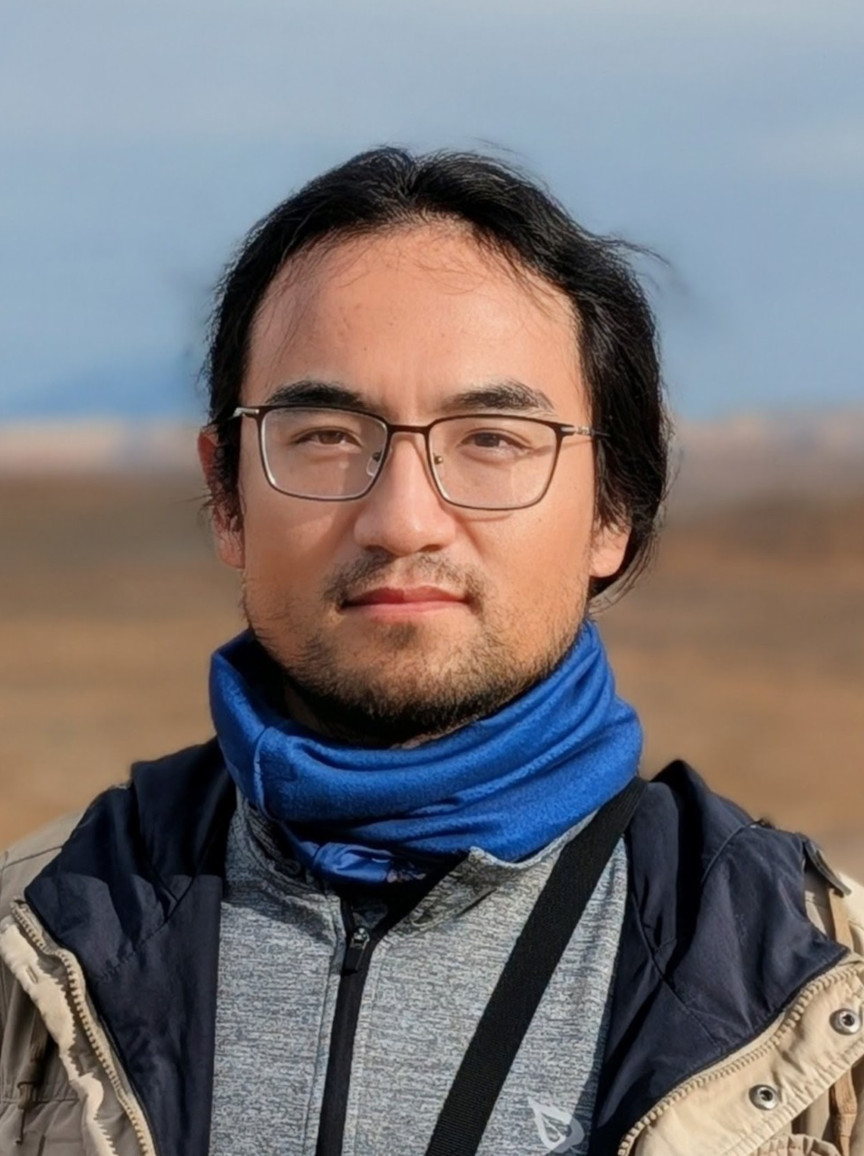
Jianwei Lyu (吕建伟)
Associate Professor (Tenure-Track) | Ph.D. Supervisor
School of Astronomy and Space Science, Nanjing University
Office: Astronomy Building, Room 427
Personal Website: https://jlastro.github.io/
About Me
My research focuses on extragalactic astronomy, mainly using infrared observations to study active galactic nuclei (AGN), supermassive black holes, cosmic dust, and star formation in galaxies.
My work combines multiwavelength surveys, spectroscopy, and time-domain observations to understand how AGN work, how black holes grow and evolve with their host galaxies, and how dust and polycyclic aromatic hydrocarbons (PAHs) trace the physical conditions in galaxies.
Much of my recent research uses the James Webb Space Telescope (JWST). I lead or co-lead several JWST observing programs and collaborate on major international surveys. I am also interested in AGN variability, dust reverberation, and other time-domain phenomena.
I welcome inquiries from undergraduate students, graduate students, and postdoctoral researchers interested in these topics. I am also happy to discuss potential collaborations.
Academic Positions
2026–Present: Associate Professor (Tenure-Track), Nanjing University
2023–2026: Assistant Research Professor, University of Arizona, USA
2020–2023: Postdoctoral Researcher, University of Arizona, USA
Education
2014–2020: Ph.D. in Astronomy and Astrophysics, University of Arizona, USA (Advisor: Prof. George H. Rieke)
2011–2014: M.S. in Astronomy, Shanghai Astronomical Observatory, Chinese Academy of Sciences
2007–2011: B.S. in Astronomy, University of Science and Technology of China
Research Highlights
13 first-author refereed papers and more than 80 publications in total
Over 9,000 citations, with an h-index of 48
PI or co-PI of several JWST observing programs
Member of major international collaborations, including COSMOS-3D, SMILES, and JADES
 Teaching
Observational Astrophysics — Fall 2026
Infrared Astronomy — To be scheduled
 Research Interests

1. AGN Structure and Emission Physics
I study the structure of active galactic nuclei and how they produce radiation. My work focuses on dusty tori, polar dust, and obscuring material around supermassive black holes.
I use infrared spectroscopy, spectral energy distributions (SEDs), and time-domain observations to investigate the distribution and properties of dust near AGN.
2. Obscured AGN and Black Hole–Galaxy Co-evolution
I use JWST and other telescopes to study AGN hidden by dust and gas, as well as the growth of supermassive black holes in the early universe.
Through multiwavelength surveys and spectroscopy, I investigate how AGN populations change over cosmic time and how black holes evolve alongside their host galaxies.

3. Interstellar Dust and PAH Emission
I use infrared imaging and spectroscopy to study cosmic dust and polycyclic aromatic hydrocarbons (PAHs) in galaxies and AGN.
My goal is to understand their physical and chemical properties, how they respond to different interstellar environments, and what they can tell us about star formation and galaxy evolution.

4. Multiwavelength Astronomical Surveys
I work on large imaging and spectroscopic surveys to identify and study galaxies and AGN across cosmic history.
By combining observations at different wavelengths, I investigate their physical properties, population statistics, and evolution, while also developing methods to identify and classify astronomical sources.
5. Time-Domain Astronomy
I study how astronomical objects change over time using repeated imaging, spectroscopy, and monitoring observations.
My interests include AGN variability, dust reverberation, tidal disruption events (TDEs), supernovae, and the detection of small Solar System bodies.
 6. Infrared Astronomy and Observational Techniques
I work with data from infrared space telescopes, especially Spitzer and JWST, and study methods for infrared observations and data analysis.
 Publications
For a complete publication list, please visit my profiles on SciX or Google Scholar.