摘要:The X-ray universe is highly dynamic, pervaded by high-energy transient and variable sources. They arise from violent and sometimes catastrophic celestial events, providing invaluable laboratories for studying the evolution of stars, the processes of compact objects, and physics under extreme conditions. Launched in January 2024, the Einstein Probe (EP), also known as “天关” (Tianguan), is a space observatory designed to detect transient and variable sources in soft X-rays and characterise them in the soft-to-mid X-ray waveband. EP features a true imaging X-ray all-sky monitor employing novel lobster-eye focusing technology, the first ever of its kind, and a powerful X-ray telescope for quick follow-ups. EP has detected many X-ray transients and highly variable sources with unprecedented sensitivity compared to previous and current wide-field monitoring instruments. This talk will showcase selected highlights, focusing on time-domain astrophysics. EP is a China-led international collaborative space mission participated by ESA, MPE in Germany and the French Space Agency.
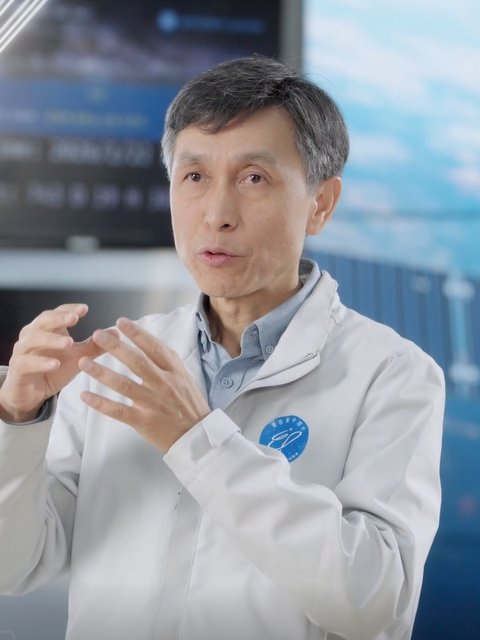
简介:Dr. Weimin Yuan is a scientist at National Astronomical Observatories, CAS. His research interests are in X-ray and high-energy astrophysics, including observational studies of high-energy transients and active galactic nuclei, and developing space astronomical instruments.
He obtained PhD from Technical University of Munich/Max-Planck Institute for extraterrestrial Physics in Germany. Afterwards, he carried out postdoctoral research, first for the development of the MAXI mission at JAXA’s Tsukuba Space Center in Japan, and later in X-ray astronomy at Cambridge University, UK. He joined CAS in 2004, first at Yunnan Observatory, and has moved to NAOC since 2010.
Dr. Yuan has been PI of the Einstein Probe mission since 2013. He led the team to propose and design the mission concept, to R&D key technologies, to promote mission adoption, to participate in the engineering development and science operations. He chairs the Science Management Committee of EP and leads its scientific research.